
|
Jejune Looks Back, and Forward, After Their First Tour in DecadesSeptember 29, 2026 |
|
|
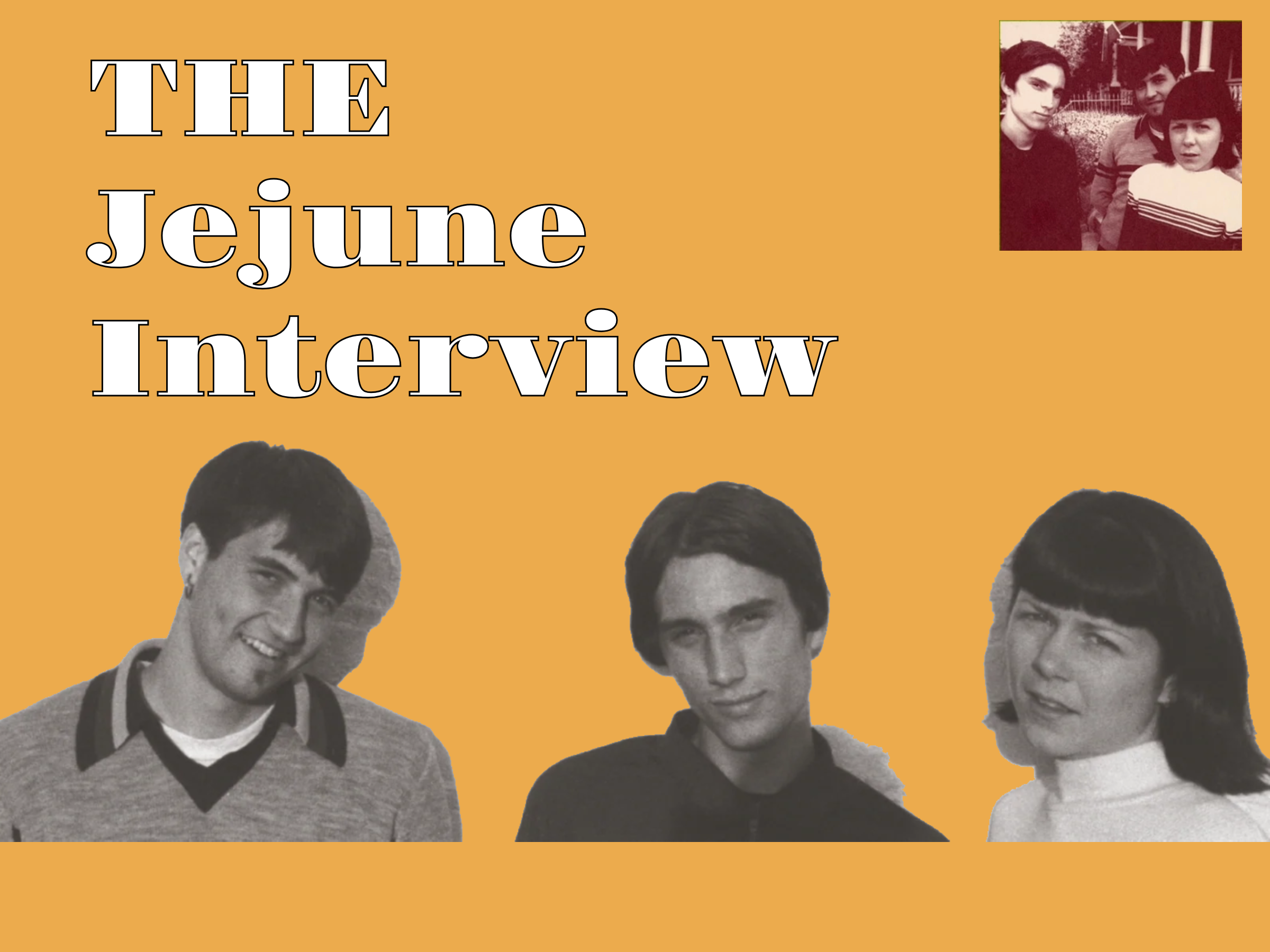
In 2000, Jejune broke up without much warning, leaving behind two albums of shimmering, blown-out emo bangers. The San Diego/Boston band never got quite the recognition some of their peers did at the time, but after their breakup, their records continued to circulate in the underground scene. Then, 25 years later, Jejune reformed, as an archival record label called The Numero Group began reissuing their catalog. They've since completed the better part of a tour across America, drawing crowds packed with both old fans and kids who weren't even born the first time the band played. Jejune sounds, for lack of a better word, huge. The three-piece band lays down extremely textured sounds that make them seem like a band twice their size, while keeping the raw bite that defines the 90s emo wave they helped define. I had the pleasure of seeing them live, and unsurprisingly, it translated gorgeously to the stage. And the size of their hearts matches the size of their sound, as they beamed with joy and passion rocking out to their songs. Absence really does make the heart grow fonder :) I was able to send Chris and Joe (drums and guitar/vocals, respectively) some questions about the reissue of their music, what it's like piecing the band's history back together, and how it feels to watch a new generation discover their songs. Here's what they had to say. subscribe for the next issueYou can unsubscribe at any time. First, I just want to know your thoughts after ending your first big tour back. Any takeaways after it? Chris- When discussing the initial re-release of our music, the notion of physically resurrecting the band, experiencing those songs live again, seemed so abstract and distant; the thought of harnessing that kind of energy and honesty felt daunting. Some of that was stripped away after we got together in a room and conjured those melodies once again...Getting out on the road was both a reminder of how incredible it is to make music and share it with others, and an amazing discovery that those same energies were still churning in a burgeoning, amazing, young scene. Experiencing that scene firsthand felt familiar in the best possible way - supportive and rejuvenating. Touring again renewed my faith in the power of music. Joe- It was so great. To be able to play with old friends and upcoming new phenoms, just a very special time for us. I’m one hundred percent when I say that I don’t think I ever thought the band would play again, and seeing that we had not been forgotten and that our music resonates with younger people is something astounding that I’m going to attribute to the irony of fate. Everyone my age remembers a TV commercial for "Freedom Rock," a compilation of 60's rock hits, and how people got turned on to music from 30 years ago. I guess the internet is the new "Freedom Rock" commercial. “Well, turn it up!” What was the process like reintroducing your band with Numero group? How did you decide what to release first & when? C- Being fans of The Numero Group - their catalogue, roster of artists, aesthetic - it was flattering and a bit surprising to us when they contacted us. It was evident, after speaking, that we were all interested in preserving the integrity of our catalogue, while at the same time embracing and championing the scene that we found ourselves in. Choosing music that encapsulated the band was tough, so finally deciding on "That's Why She Hates Me" felt right, as it paints fairly broad strokes and preserves some musical mystery and drama. J- When Ken approached us, we were stoked because he had already done incredible stuff for bands I knew and loved, like Boilermaker & Clikitat Ikatowi. Then I found out he was loosely associated with the San Diego underground scene, which made it cool to know he actually was part of it all back in the day, not just some archivist observing from afar. Deciding how to roll things out just came from doing what felt natural and our personal preferences. Actually, now there’s a different perspective when seeing what songs have connected with people and how sometimes we’re all surprised by it. While putting the archive together, did you discover that the three of you remembered Jejune differently in any way? C- I think that it was more a matter of "fill-in-the-blanks" between the three of us. Everyone remembered different pieces of events, recalled disparate components of past adventures, so that once we began with sparks and kindling of memories, we were all soon stoking a joyful blaze of anecdotes and stories. We all remember the band, and rehearsals in particular, as joyful and optimistic, and that is something that is very important for us to preserve. J- Well, some of us just remember that time in general better than others, but it’s great to recollect some of the moments that were crazy/funny/wild. It’s amazing what can happen in five years and how it can feel like a complete lifetime within that period. With that, when listening back to Wait A Lifetime as one complete body of work, does it still feel like it's yours? Does anything sound like it was made by different people? C- It's always so difficult to be entirely objective when speaking about our music. I feel like the entire catalogue sounds like us, maybe not entirely cohesive, but US throughout. We were always flying by the seat of our pants, hoping for the best. In listening back, I hear a rambunctious, fearless, sometimes shameless group of explorers whose youthful energy I'm more than a little envious of! J- Oh, it’s us. I understand your question, but when you are in a band and constantly touring and occupying the same space, the noise you make together is a reflection of that and a window into it that only strengthens with time. During your first run of the band, the scene operated in a very DIY-based community. Now, a huge part of your discovery is happening through internet forums and algorithm-influenced playlists. What does it feel like to watch this highly organic music find a new life through a highly digital machine? Do you feel like it's a completely different world or a new version of word of mouth? C- The digital machine that is currently pushing everyone's music is theoretically ultra-advanced word of mouth/tape trading, with the unfortunate downside of monetization and inherent greed lurking around every corner. .....Musicians have always had to look forward towards the future, while keeping a foot planted in the past. Embracing technology is an inevitability, and using the internet as a tool to discover new music feels fairly organic and allows for a continued DIY spirit. J- It is a completely different world in so many different ways, but probably first and foremost, music has become free. Maybe as it was always meant to be? But in any case, to stay. It’s so awesome that real fans want to buy the physical thing and support the band, but essentially, music is free. So it’s completely different than when we were coming up. We would maybe hear a song on the radio or see a bitchin video on MTV (120 Minutes), and save our pennies to go buy the tape or CD. It’s amazing that mankind’s library of music is available to anyone who can install an app, but it’s very different. Sometimes you would buy an album just because the cover art was cool, or the band looked cool in their photo lol. I think it’s all for good, really. Music is meant to find those who resonate with it, and the other way around too. Have the songs taken on new meanings in 2026, for you or for the fans? What do you think younger listeners are connecting with in your music? C- I don't think the songs have taken on new meaning to me; rather, I feel I'm less critical of the songs and able to appreciate them and the place that they came from. I think what younger audiences are connecting with is the thing that still attracts us to the band: the honesty of the music, not just thematically but throughout the whole process. The way we discovered music together, writing together and recording that music together, it was new and fresh and had a special kind of energy, and I think artistic minds will always ferret that out and be drawn to it. J- The lyrics will always be about what they are about for me. But going back to some of those memories is a trip. Some good and some not so. I think younger people are feeling it because our music comes from a place of young cynicism and discomfort with societal norms and the delusion of an older generation by means of three instruments and two voices, one male and one female. I think there’s a real movement happening where women want to participate in rock & roll, and we were doing that. I think younger people also want to feel something when they listen, and we were always trying to stir emotion within by using melodies and dynamics to the max potential. Even when we were just fucking around. We’re all kind of callow in our own ways. Finally, after the reissues and these shows, what do you want Jejune to be next? C- As long as Jejune remains three friends who enjoy making music together, everything else should work out just fine. J- To be? With all this wonderful enthusiasm, we could possibly be doing this for a while. Or maybe just a sweet kiss goodbye 😉 Thanks so much to Jejune for taking the time to answer these questions. Wait a Lifetime is out now, and Jejune is still touring. If you haven't heard them live, do yourself a favor. subscribe for the next issueYou can unsubscribe at any time. |